This last summer I decided to travel to a different and unique part of the world. A territory belonging to Norway but with the curious legal set-up of an autonomous region with settlements built by Norwegians and Russians over centuries, mostly to explore the local natural resources.
What is now one of the most accessible ways of visiting the Arctic, Svalbard has a rich history that clearly portrays humanity’s exploitation of the planet. The region is almost fully uninhabitable if not for modernity. In the past, the very sparse population was seasonal and linked to the extraction of natural resources that started with whale hunting in the 18th century, moved to the fur trade, and finally to coal mining in more recent times.
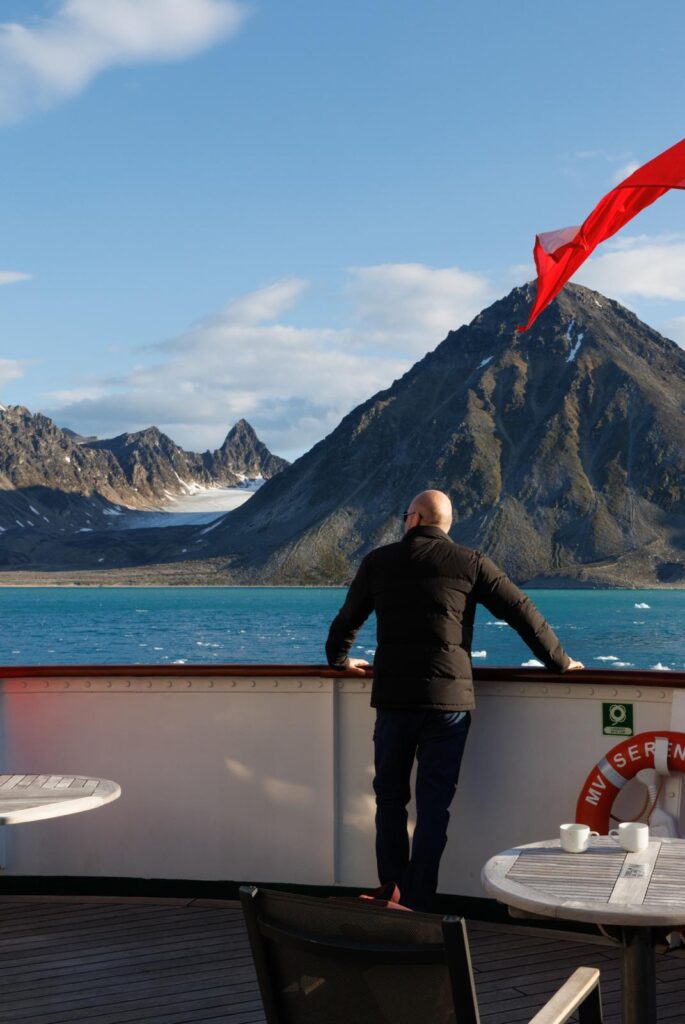
The ecosystem, a transition between the extreme cold tundra and the Arctic desert, was never really meant for humans, except for the tough, poor people sent by colonizers who exposed themselves to long periods of darkness and cold to exploit the local environment in search of wealth. These days, a very different kind of explorer is landing in Svalbard with a lot more comfort and services, coming to experience the beauty of the region as its main attraction. We too traveled all the way north from Amsterdam for the same reason. The plan was to spend a couple of days in the largest city, Longyearbyen, and from there board the Serenissima, an Arctic cruise that would take us to the farthest parts of the archipelago, reaching parallel 80 — the closest we could get to the polar circle while still enjoying a champagne toast from the comfort of a cruise ship.
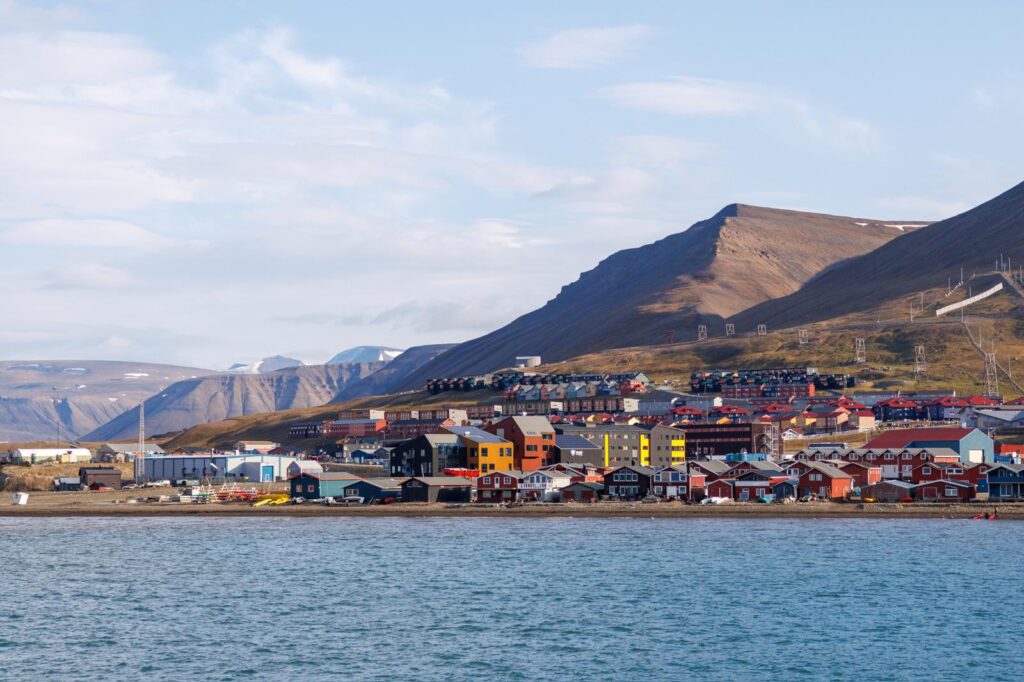
Longyearbyen is now home to 3,000 people. Thanks to modern heated facilities, life prospers in town even during the five months of total darkness and freezing winter temperatures. Signs warning of polar bears mark the edges of the small town, where one is not allowed to walk beyond without a rifle to protect against the bears that hunt on the surrounding mountains. Polar bears are the poster child and main attraction most tourists hope to see in Svalbard, but few actually do.
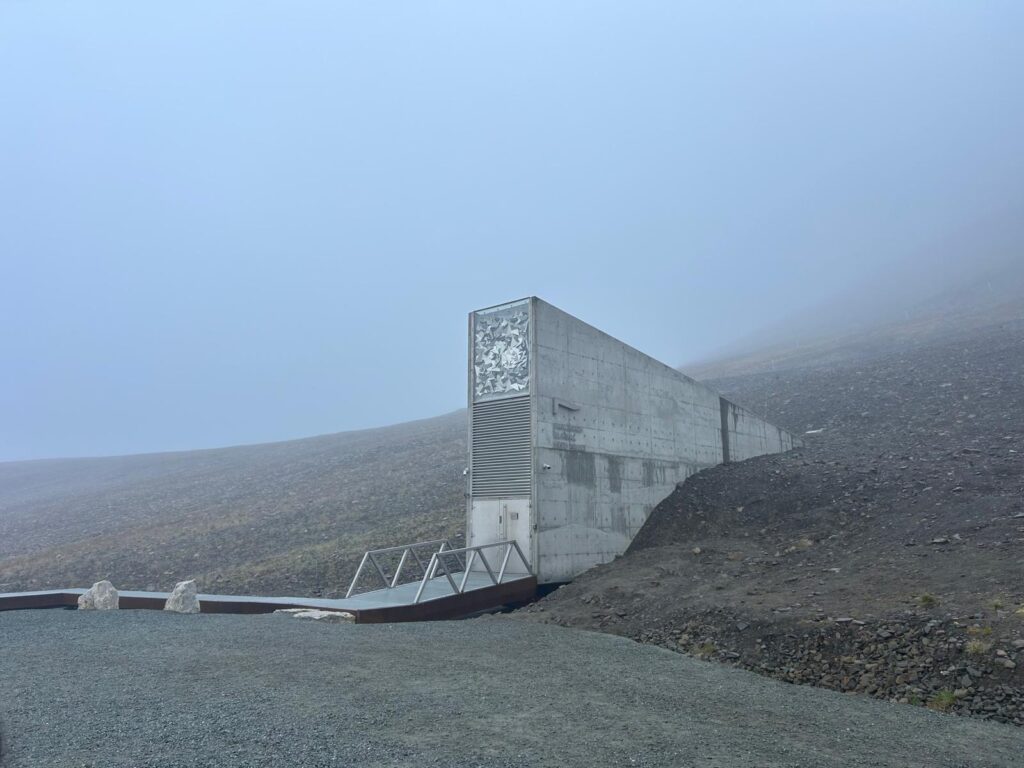
Longyearbyen also has another very curious attraction: the global seed bank. This initiative from the Norwegian government, in collaboration with the United Nations, created a vault to store all global food seeds. It is accessible to any country and keeps each nation’s seed bank at ideal temperature and high security standards, preserving them for future catastrophes. So far, only one country has had to request its seeds after collapse: Syria. The initiative claims to be apolitical. A common anecdote told by local guides is that the drawer with seeds from North Korea is right next to the drawer from the US. Another anecdote is that no one is allowed inside the vault except scientists who follow strict security protocols. Even Donald Trump was denied access when he requested to enter. One can only imagine what the US president was doing in this remote part of the world, but it seems his visit was not enlightening enough to convince him of climate change or regretfully meet a polar bear without his security staff.
We admired the tunnel entrance to the vault, going deep into the Earth and the permafrost that keeps it cool. The silence of the endless summer day was broken by the call of Arctic foxes in the distance. We couldn’t see them, but we could hear them shouting to each other, probably alerting one another about the humans taking selfies in front of the shiny glass tunnel.
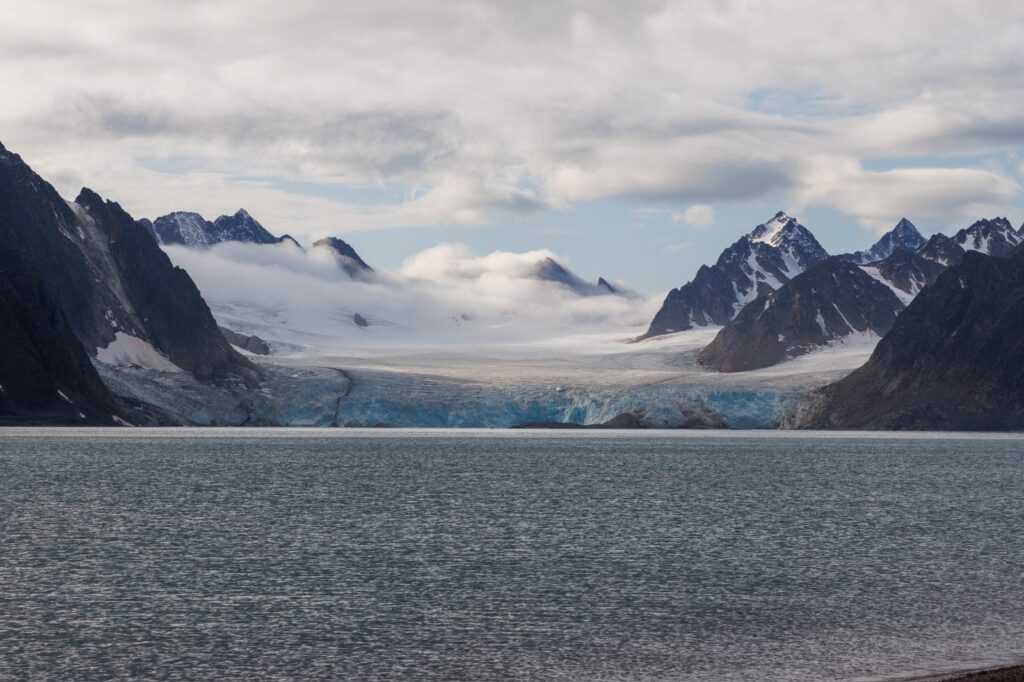
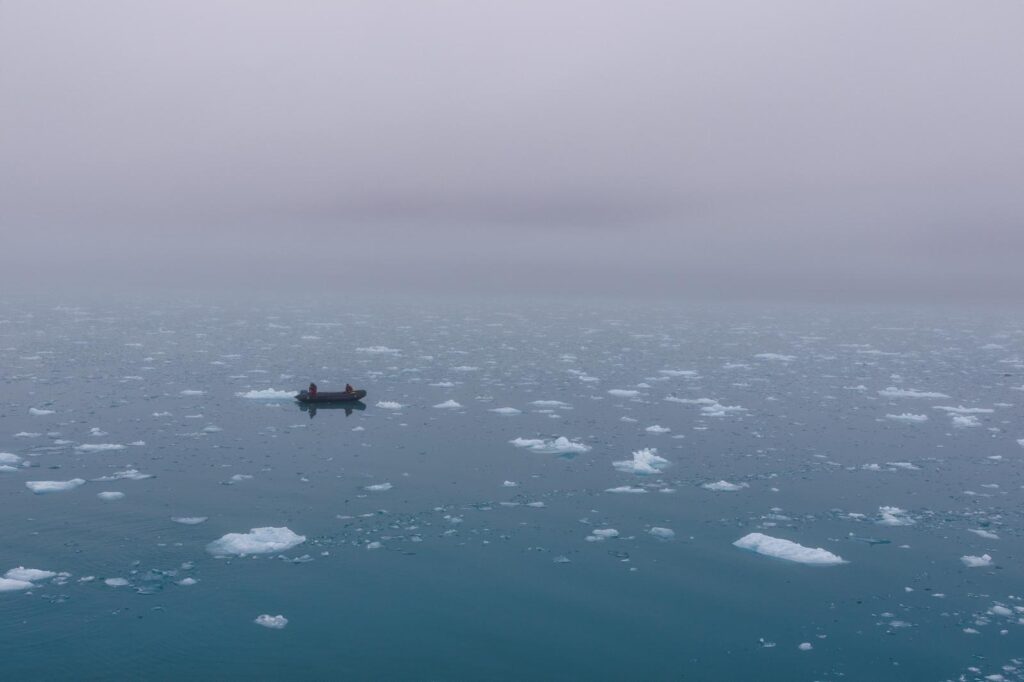
Sailing around the archipelago feels surreal. The silence of the landscape is often broken by the sound of massive glaciers melting into the sea. Here you experience daily the effects of climate change and the drastic reduction of glaciers. At the same time, the untamed wildness of the place shows how resilient nature is in resisting human exploration. A few hours sailing from Longyearbyen, we came across ghost towns built during the coal rush and now abandoned. Norway officially closed its last coal mine this June, and now only the Russians are left mining in a small settlement. The large whales are almost all gone, driven out of the region during the aggressive whale hunting of the 18th century. When the first colonizers set foot in this remote region, accounts described that one could walk across the fjords stepping over whales, as so many of them called these waters home in the summer. Today, spotting one whale is enough for all tourists aboard the ship to rush to the deck to try to get a good picture. On our trip, we were blessed to see a whole school of white belugas, hundreds of them, swimming close to shore while we explored the ruins of an abandoned settlement. The large sperm whales that were hunted in these waters are rarely seen.
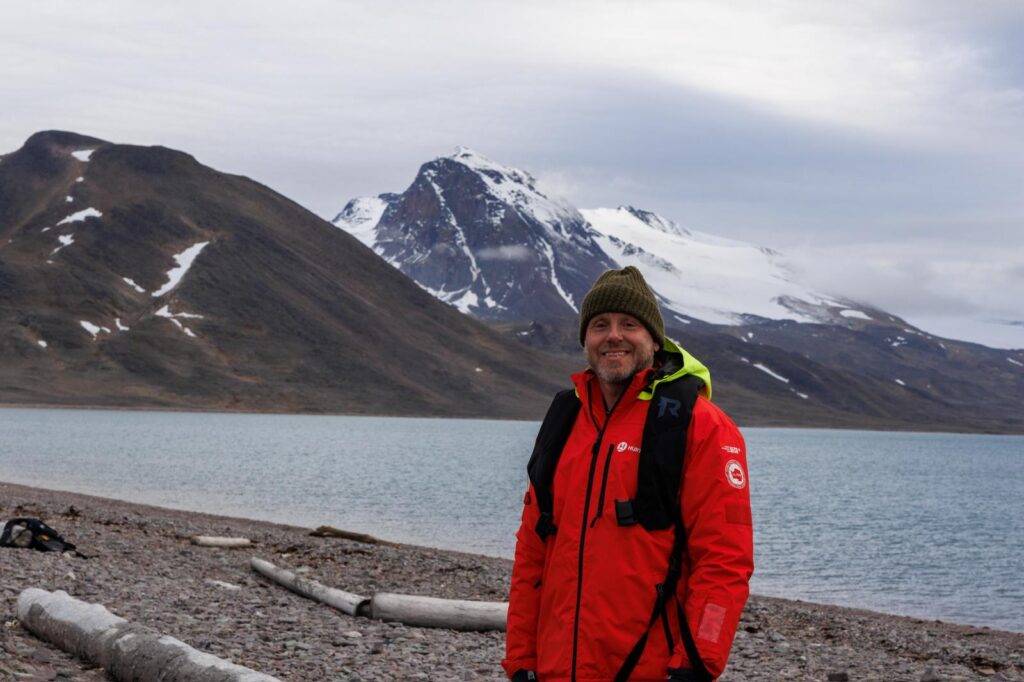
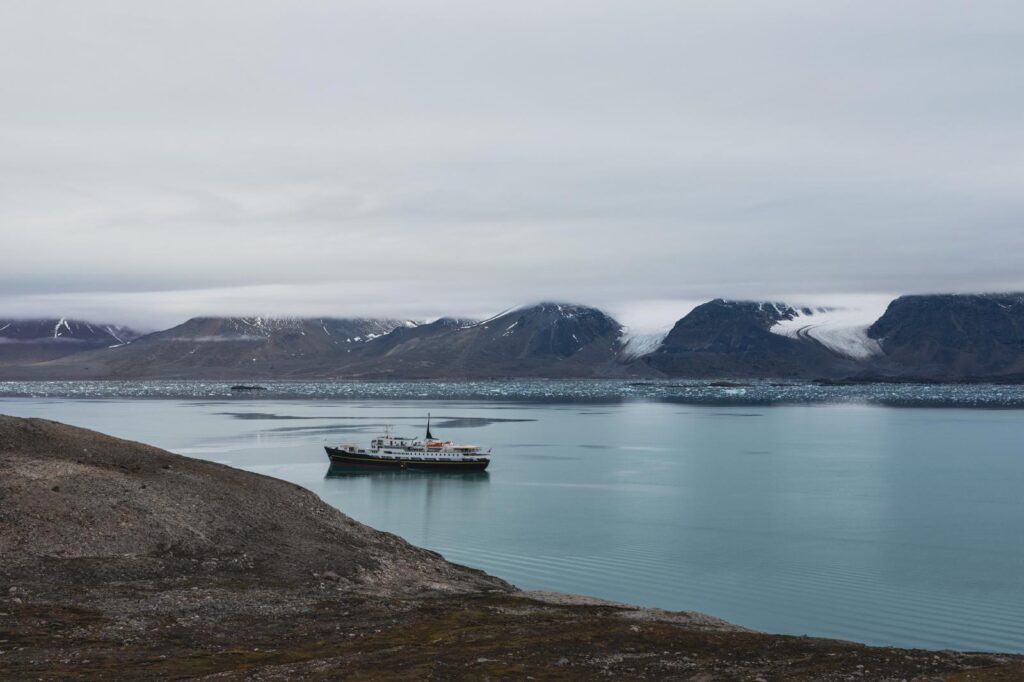
Hurtigruten, the company that manages the small cruise ships like the one we were on, combines sailing with landings that offer the chance to admire from the shore the richness and solitude of the Arctic ecosystem. There are also many historical sites showing what remained from the days when whalers hunted in these waters and hunters spent the whole winter in cabins setting traps for foxes, deer, and polar bears, which were valuable for the fur trade. Many adventurous entrepreneurs tried to exploit the unclaimed territories, but many never returned. You can still see some of their graves during these landings. Today, the majority of visitors are tourists trying to see what remains of the animals that were once abundant in this region but were hunted almost to extinction. Those that survived and now show signs of population recovery, like deer and polar bears, face the consequences of climate change. The region has been experiencing more rain and extreme weather. When rain is followed by a colder day, the water freezes on top of the snow, making it very difficult for deer to reach the grass beneath. Many die of starvation. The foxes that feed on deer carcasses are seeing a spike in their population now that hunting is illegal and there are more dead deer to feed on. The polar bear is adjusting its hunting skills and diet, hunting more inland due to the reduction of the ice caps where seals live. Hunting inland eventually brings them closer to settlements in search of human waste.
Although Arctic guides say it is part of the normal cycle for polar bears to die of starvation as they lose their teeth with age, there are definitely new challenges in this beautiful landscape that affect these wild populations.
The irony is that it took several centuries of exploration and ecosystem destruction for humans to realize that working with the ecosystem is a much more profitable endeavor than extracting from it. Longyearbyen now has an economy built around ecotourism and education. Some of the most important research bases in the Arctic are in this region, including a university fully dedicated to climate studies in Longyearbyen. In the northernmost settlement in the world, Ny-Ålesund, several research bases from many nations stand side by side in a village built around resilience and collaboration. There are close to 300 inhabitants in the summer months and around 30 in the winter. The majority are climate scientists. In the past, the town was also a coal mining site. Visiting the museum and a few preserved houses, one can experience the hardship miners endured with their families, sent to this cold corner of the Earth to strip the land of its minerals.
Besides the history of the first people who came to exploit the land’s riches, Svalbard was also the stage for another human endeavor: the conquest of the Arctic and the launch of polar explorations. In the spirit of our paternalistic view of the world, men came from all walks of life to compete for who could reach the North Pole first and plant their country’s flag. Anticipating what we would later see in the 1980s with space exploration, teams from Norway, Russia, the US, and Italy were trying to be the first to reach the North Pole using the latest aircraft technology of the time. Massive airships were launched in the 1920s from Ny-Ålesund to try to reach the North Pole. Many died in the process, until Roald Amundsen succeeded with enough evidence to back his claim and became a national hero. He died young in a rescue mission to find his Italian rival Umberto Nobile, who had crashed while attempting to repeat the same journey.
How funny is the human race, willing to perform remarkable stunts in the spirit of competition, wealth, and power. The thirst for wealth, fame and power has brought desperate and adventurous men to the most remote corners of the planet. Nature fought them back fiercely, but human persistence eventually tamed the landscape. Today, we rely on this remote part of the world to keep our most precious treasure under the regular cold temperature of its permafrost and low seismic activity. Not coal, whale oil, fur, or even gold, but the seeds that Mother Nature gave us thousands of years ago — the seeds that allow us to cultivate food and survive on this planet.